
By Gaurav Shekhar – Linkedin profile
Abstract: This is due to the fact that the technological growth, most especially in the artificial intelligence and automation system has influenced a number of fields, among them being software development. Also, in this paper, the author looks at the advancement of AI and Automation in software engineering and discusses the effect of the two key concepts in enhancing the development processes, efficiency and quality of code, as seen in the sections below. In this part, the tools and techniques involved in ASD are described, the benefits and issues are explored, and the different roles of developers are also described, especially in the context of ASD. AI’s impact at different phases of the software development life cycle, such as requirement analysis, design, coding, testing, and implementation, is analyzed. The applicability of the AI tools, examples including machine learning models and automated code generation tools, are also discussed in considerable detail. This study is divided into six sections: There is the research proposal including such sections as the definition of the problem, literature review, methodology, results, and discussion with the conclusion. The introduction only gives the background on AI, automation and their applicability to the development of software. A literature review also presents a historical perspective of the integration of AI in software engineering and major work and developments. The methodology highlights the methods which were employed in order to collect the necessary information and knowledge. In the result and discussion section, this study provides the outcome of the research. It measures the benefits of using AI in terms of coding efficiency, reliability in software, and cost-effectiveness as well. Last but not least, the conclusion explains the opportunities and threats that underlie the AI revolution to refashion the software development paradigm.
- Introduction
It is interesting to examine how software development has changed within the last few decades from a process that relied more on manpower and manual coding to a process that incorporated automation and artificial intelligence (AI). This was tedious and lasted for some time, especially with lots of coding and debugging being done manually, which introduced a lot of errors. [1-3] Automation tools came into the picture as another revolution, which brought concepts to solve the mundane problem of mere coding where certain functions like compilation and testing were cumbersome. Over time, artificial intelligence became a revolutionary concept, which introduced better features into the software-making process. Today there are available tools which may generate small code snippets, detect even the most complex bugs and fix them, suggest means for increasing work performance and even help manage large projects. This move towards an AI-intelligent approach to development is changing the approach and flow of development while making it faster, more accurate and much more efficient.
1.1. Importance of AI in Modern Software Development
The use of Artificial Intelligence (AI) in today’s software development environment has ensured various advantages that improve efficiency, precision, and creativity. Here is an in-depth look at its significance:
- Enhanced Coding Efficiency: Specifically, AI tools enhance the coding speed because most integrated tasks are repetitive and can be automated or have templates created for them. For example, modern code companions such as GitHub Copilot and OpenAI Codex are capable of generating code driven by simple natural language descriptions or code stubs that are not yet full-fledged, thereby saving the developer’s time for completing repetitive tasks. What is more, this automation accelerates development while helping developers concentrate on deeper, more creative decision-making processes related to software design and architecture. Simple coding tasks reduce the burden of coders and contribute to the progress of the project to be delivered faster.

- Improved Accuracy and Error Detection: Arguably, this is one of the most important benefits that have been provided by AI to software development, specifically in that it provides means to enhance the correctness of subsequent processes as well as error checking. Services such as DeepCode and CodeGuru employ an artificial intelligence algorithm that will analyze the line of code and detect areas of the code that might contain errors or even areas that consist of flaws that human eyes cannot observe. Inflammations with such tools lower the risk of key mistakes being pushed to online production, giving software more reliability and quality.
- Accelerated Testing and Quality Assurance: A highly effective area that relies on software testing and is time-consuming as well as requires a lot of effort is also an excellent candidate for the usage of AI. Then there are AI-based testing tools like TestComplete and Tricentis Tosca that can create and run tests with a small or even no contribution of a human element. AI can use historical test data to come up with edge cases and then optimize for the weakness hence thorough testing. This not only helps in speeding up the process which is the testing phase of any software, but also increases the efficiency of various tests that are done, which in blends gives good and more accurate testing results, thereby giving more efficient and bug-free software.
- Intelligent Project Management: Two more highly significant application areas of AI are predictive analysis and task automation in project management. Appropriate project management tools powered with artificial intelligence have the capability to predict a project’s duration and potential hazards and even allocate resources according to the project’s specifications and historical data. These predicted capabilities enable decision-making, in this case by the project managers, to optimize workflow and overall project performance.
- Enhanced Personalization and User Experience: Mobile applications can be made more specific to the users’ needs by integrating AI into the development of software applications. By evaluating the users’ activity and preferences, AI can propose new options, changes to the interface, or content relevant to the individual user. This capability improves user satisfaction by aligning software with regard to the user preference, making the software respond to the user’s desire, and making the user more engaged.
- Facilitating Continuous Integration and Continuous Deployment (CI/CD): Today, CI/CD practices are crucial in the field of software development in order to keep code of high quality and shorten deployment time. Artificial intelligence helps to automate the CI/CD pipeline by incorporating the build, testing as well as deployment procedures. AI tools can look at code changes, run builds automatically and can also release updates using the least human interactions. This automation guarantees that new functions and patches are deployed swiftly and stably and promotes the usage of agile development paradigms.
- Reducing Development Costs: In one way or the other, various techniques of software development are made cheaper through the use of Artificial Intelligence. Implementing AI in the process also optimizes the amount of time and effort that is active in a work, thereby providing shorter time periods for the execution of the projects. Furthermore, the identification of bugs at an early stage and the optimization recommendations also help in preventing a large number of late fixes and enhancements hence reducing the total cost throughout the life cycle.
1.2. Evolution of AI and Automation
Artificial Intelligence (AI) and automation can be described as the advancement that has improved technology and industries over time. This section discusses the historical perspective and history of AI and automation with emphasis on its evolution from a concept to a reality in software development.

● Early Beginnings of Automation: Automation can be dated back to the early part of the twentieth century with the friction between mechanical automation and early calculating machines. Process automation was initiated by assembling line innovation, which capability extended to software advancement. Within computing, the start of the innovation in the first electronic computers established in the years around the 1940s and 1950s, like ENIACs and UNIVACs, became the basic technology for the later developments in software and automation.
● The Advent of Software Automation: The next significant advancement was in the period of 1960 and 1970, and was commonly termed software automation as the first compilers were invented together with early programming languages. Compilers enabled the mechanization of translation of higher-level languages into low-level languages, therefore minimizing the amount of coding work. During this period, Integrated Development Environments (IDEs) appeared, and the first version control systems were also introduced which provided auto mechanics of the software.
● Introduction of Early AI Technologies: The late seventies and the eighties that continued up to the nineties saw further advances in AI, whereby the first expert systems and the initial uses of machine learning were developed. MYCIN and DENDRAL are examples of expert systems, which were created to mimic real-life experts in certain field and to offer useful inputs and recommendations. With the algorithms for machine learning and pattern recognition society created the basis for the progress of AI. During this period, the first generations of automatic testing tools and continuous integration systems appeared, which opened new opportunities in the developers’ workflows.
● The Rise of Machine Learning and Big Data: Machine learning and big data, which emerged in the early 2000s, are founded on the enhancement of computational abilities and media storage. Concepts of Artificial intelligence and Machine learning evolved as the FLT systems were capable of understanding and learning from large data sets over a period of time. The application meant that AI systems could draw more reliable conclusions based on big data available at their disposal. Thus, at this stage, initial penetration of AI technologies into software development took place with the help of tools for the automated analysis of code, bug detection, as well as optimization of the program’s performance.
● Emergence of AI-Powered Development Tools: The use of Artificial Intelligence tools in software development grow on a steep slope in the 2010s. GitHub Copilot, OpenAI Codex and DeepCode serve as examples of the use of AI in code automation, bug detection and code review. All these tools use NLP, neural networks and deep learning to improve elements of the SDLC process such as software requirements definition. The help of AI also developed other testing capabilities. These included consistent machine learning and even prognosis capabilities and the ability to create test cases automatically.
● Current Trends and Future Directions: In subsequent years there has been improvement in the advanced use of AI and automation where the approach advances to adopt the use of AI in DevOps and CI/CD. Today’s AI technologies provide developers with intelligent code completion, infrastructure manipulation, and monitoring with intelligent alerts. The future of AI in software development is to attend even higher levels of skill, including autonomous coding assistants AI project management and other more profound depths of integrating deep machine applications with the blockchain and quantum computing technology.
● Impact on Industry Practices: The advancements in the technology of AI and automation have changed the practice in industries especially how the software is developed, tested, and maintained. The application of automation has helped in cutting costs, reducing manual labor, and speeding up development cycles. AI has helped in improving the quality of software through such aspects as intelligent insights and even predictions helping in improving the development processes. Due to constant enhancement in the technology of AI and automation, the development of software faces expanded challenges in the future.
-
Literature Survey
2.1. Historical Evolution of Automation in Software Development
There have been advancements made in the area of automation in software development and these have been defined below. The process of evolution started in the year 1950s when the development of compilers emerged, which helped to translate standard languages to machine language, making the programmer’s task easier and fast. [4-9] It is important to notice the development of such an early tool, which laid the groundwork for future tools. Continuous integration tools like Jenkins came into use in the 1990s, and Selenium for testing added more capability to the software development process. Jenkins changed the means by which developers incorporated code changes, and Selenium, on the other hand, prepared the means for higher levels of AI with its functional testing of web applications. However, early automation was not as intelligent or flexible as what current high-end AI incorporate into the automation process. Modern tools that incorporate AI Malware learn from these technologies as they present improvements in the ability to write code, evaluate it as well as deploy it.
2.2. AI and Code Generation
The concept of generation of code through the use of artificial intelligence can be dated back to the 1990s. However, the early generation approaches were simple and required careful guidance from the human programmer. Code generators of that period were rather narrow tools that could be used only in single sectors and which are different from the intelligent systems of the present day. This is because in the recent past with the incorporation of AI on the code generation tools, the progress has been immense. For instance, GitHub Copilot and OpenAI Codex bring another level of AI-driven code generation where the AI is fully capable of generating larger sequences of code from the input given by the user. These tools incorporate such features as smart context-sensitive code completion, which employs the use of machine learning to learn the intent of the programmer and write the code to be typed in with increased efficiency, thus reducing the instances of coding that have to be done manually. It is possible to discuss that the transition from such concrete domain generators to smart systems can be considered the key achievement in generating the code automatically.
2.3. AI in Software Testing
Software testing is one of the phases of software development that requires a lot of effort; however, significant improvements have been achieved in the application of automation. Earlier automation testing tools like Test Complete and Tricentis Tosca helped minimize testing efforts that were performed manually. The above tools helped in automating most testing activities which helped in improving testing activities and making them more effective. Modern software testing has continued to be changed by the incorporation of AI over the last several years. The use of machine learning methods in handling source code patterns for the creation of test cases and when it went beyond automation incorporated the ability to predict. It is now possible for the deep learning algorithms to feed the developers with extra details regarding the possible loophole or edge cases that a developer may not have a probabilistic vision of hence improving the testing effectiveness and the general software quality. This evolution is a great improvement in the level of testing in software development and enhancement.
2.4. Machine Learning Models for Bug Detection
Nowadays, machine learning models have shifted to the center of the activities that are aimed at detecting and eliminating the problems associated with code issues at the initial stage of product development. Software like DeepCode and CodeGuru use the data and the sophisticated techniques of machine learning to shed light on areas of code that are most possibly buggy. Often, these tools are applied to massive databases of code changes and defect patterns, which in turn offer recommendations to the developers dealing with the problems at hand, thus preventing further development of these problems. This predictive capability not only reduces the debugging time but also the quality of the developed software because it allows developers to fix vulnerabilities before they can be exploited. It is important to note that the use of machine learning in bug detection, comes as a much better approach than the conventional one in that it provides a much better and timely outcome in identifying code quality.
2.5. The Rise of DevOps Automation
DevOps practices, which emphasize continuous integration, continuous deployment (CI/CD), and ongoing monitoring, have been greatly enhanced by automation. The integration of AI into DevOps has optimized complex workflows, minimized human errors, and accelerated deployment processes. Tools such as Ansible and Puppet, along with AI-driven platforms like Harness, play a critical role in managing infrastructure, ensuring smooth software releases, and handling rollback strategies. AI’s ability to automate and streamline these processes has led to faster, more reliable deployments, contributing to the overall efficiency of DevOps practices. The rise of AI in DevOps reflects a broader trend towards greater automation and intelligence in software development workflows.
2.6. Key Challenges in Implementing AI and Automation
Nevertheless, there are a number of challenges that still arise in AI and automation in software development. A major challenge relates to the relative newness of this technology to most developers, who may not have the necessary experience or knowledge of the tools available and their implications in development, hence the challenges in adopting them. Also, the cost of implementing such AI technologies is high, a factor that does not augur well with SMEs, who might not afford the high costs needed to implement the technologies. AI models also have issues to do with bias and accuracy whereby the model will have biased data fed into the program hence a wrong code or suggestion. These issues, therefore, suggest rebutted approaches that will help in addressing the challenge, such as the training programs, costs, data quality and model accuracy which must be an ongoing process to ensure they improve continually.
-
Methodology
3.1. Research Approach
This study adopts a qualitative research approach [10-14], drawing on three key methods to explore the integration of AI and automation in software development:
- Methodology
3.1. Research Approach
This study adopts a qualitative research approach [10-14], drawing on three key methods to explore the integration of AI and automation in software development:

- Literature Review: In particular, the literature review involved the evaluation of existing information sources which includes journal articles, conference papers, and white papers. However, such sources gave a sufficient explanation regarding the outlook, development and issues faced in employing the paradigms of AI and automation in designing software. Analyzing the literature review of theory and the recent research work available in the literature, one came to know how AI has transformed from automation tools to smart and efficient tools which help the developers in various phases of the Software Development Life Cycle (SDLC). Some of the issues that were raised in this review and which are to date include; cost of implementation, bias from the implemented AI model and proficiency in AI technologies in software engineering.
- Tool Analysis: This research has involved a critical assessment of Artificial Intelligence based software development tools. We chose several popular tools, including GitHub’s GitHub Copilot, DeepCode AI, and the automation tool Ansible and read through their documentation and specifications, as well as their application scenarios. Official sites and developers’ feedback were also considered to evaluate the ability of all the tools in code generation automation, bug detection, and other DevOps tasks. This took a closer look at how these tools work, what AI technologies underpin them (e. g., machine learning, NLP or rule-based automation), and the benefits that developers can expect. Also, there emerged how the evaluation showed how the use of AI saves time in coding through the suggestion of optimized code and efficiency in testing.
- Case Study Review: The review of the case study focused more on real-life Artificial Intelligence and Automation adopted by organizations such as Microsoft, Google as well as IBM. These companies have been defining the use of AI for the development of software applications since they have adopted the use of tools and frameworks that incorporate AI in the development process. Studying these cases allowed us to obtain practical experience in implementing the advantages and drawbacks of using AI in LSEWE projects. Microsoft has recently released GitHub Copilot, which demonstrated its efficiency, and, in the case of Google, the corporation applies machine learning for code optimization and drastic increase of deployment speed with zero impact on code reliability. These case studies also showed how, within DevOps, AI has been applied in the CI/CD pipeline.
3.2. Data Collection
The data collection for this study relied on three main sources, each contributing a unique perspective on the impact of AI and automation in software development:
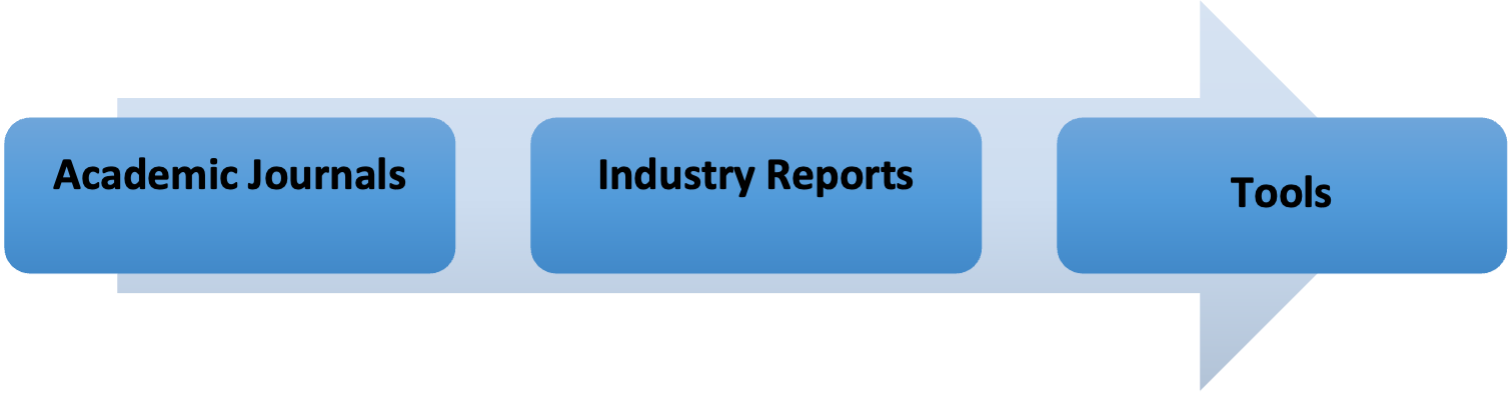
- Academic Journals: Articles were used as the primary source mainly with that purpose in mind because they provided a theoretical foundation on the subject of Interest under consideration – Artificial Intelligence and automation of software engineering. It is so only to a certain extent since the amount of papers till May 2023 helped in building background to understand the change that had taken place in the practices having links to AI-integrated SDLC. Transactions on Software Engineering, Journal of Software Engineering and Computing surveys published articles having the enhancement in algorithms using Artificial Intelligence, the problem of incorporating artificial intelligence and artificial intelligence in the construction of code, testing and bug detection. These sources were helpful in putting limits on the fresh trends and finding out how much more is required to be studied on some issues that are still undiscovered and, therefore, the academic backgrounds of this study.
● Industry Reports: The analysis of the different publications like reports and white papers of leading tech companies like Microsoft, Google, IBM, etc., was helpful to anchor the study in real-world applications. These are some of the leading companies, which adopted artificial intelligence technology and have put AI tools into practice in their development processes. Their reports offered a rich source of information on how AI and automation are disrupting and revolutionizing software development, DevOps automation, intelligent bug detection and test automation, among many others. Success stories in those reports described examples of how the deployment of AI translates into tangible improvements in productivity, code quality, and time to market. Moreover, these documents provide information on implementing AI issues and solutions that have been encountered; among them, there were scalability problems, the incorporation of AI tools into existing ones, and human supervision concerns.
● Tools Documentation: The official technical papers of famous AI-based software development tools, including GitHub Copilot, OpenAI Codex, DeepCode, and Amazon CodeGuru. Another important source of this study was the manuals and documents of the above-said tools. These documents offered technical specifications on the use of each tool and the architecture of the tool along with the AI methodology used in it, which includes machine learning, NLP and rule-based automation. From the analysis of these documents, we were able to get familiar with the strengths and weaknesses of each tool, how it worked in different programming languages, users’ feedback, and the existing issues or bugs. Having outlined general descriptions of these tools and their relevance to improving the efficiency of software development, this detailed technical analysis provided a valuable basis for comparing them.
3.3. Tools and Techniques
In this work, several AI tools across the SDLC were also assessed. Here are the tools that signify progressing in AI technologies, solving problems like code generation, bug detection, and the DevOps process. [15-18] below, we provide detailed insights into three key tools: GitHub Copilot, DeepCode, and Ansible.
3.3.1. GitHub Copilot
GitHub Copilot is a cutting-edge assignment writing assistance tool that utilizes Artificial Intelligence that GitHub created with the contributions of OpenAI. The tool uses machine learning and Natural Language Processing (NLP) in order to help the developers receive code suggestions based on the natural language input in real time. Copilot is tightly embedded into software development tools such as Visual Studio Code, which enables developers to code much faster by providing means for automating mundane, repetitive tasks and writing less boilerplate code. Due to its capability to provide context-sensitive code fragments, it can be most helpful for upgrading efficiency in the early phase of programming. Copilot works with a wide range of programming languages and offers code completions right in the line so that the developers can improve their work as fast as possible.
- AI Techniques Used: GitHub Copilot masks itself behind the NLP and machine learning algorithms with learning based on billions of lines of open-source code.
- Key Features: The features added include context-aware suggestions, the support of multiple languages in-code, inline autocompletion, and autocompletion of entire functions or classes from a textarea comment or hash-prompt.

3.3.2. DeepCode
It is an AI tool used specifically for code analysis and bug detection with the name DeepCode. It deploys machine learning for code base search for defects analysis of datasets to detect security vulnerabilities in the code base. Besides, DeepCode is not a typical static analysis tool whereby code is analyzed conventionally or based on the experience of human developers as well as other conventional methods; instead, it incorporates Artificial Intelligence that helps it to learn from millions of open-source projects and is therefore capable of detecting subtle problems. DeepCode is used to refine the quality and the security of code, and thus, it is more useful to the teams in the testing and debugging of the code at the SDLC.
- AI Techniques Used: The most important technology used by DeepCode is machine learning used for code pattern recognition and for searching for anomalous code. These models are updated based on open repositories and the performance is very dynamic.
- Key Features: This is; automated bug detection that helps to identify weak links in the code, active scanning for security vulnerabilities and AI suggestions when it comes to improving the code.
3.3.3. Ansible
Ansible can be described as an automation tool that is primarily structured to address IT environment management and application deployment and simplification of repetitive DevOps activities. However, as is the case with many of the advanced tools and applications we mentioned in this guide, Ansible does not actively use AI technology like that of GitHub Copilot or DeepCode. However, it serves as the backbone of most corporations for rule-based automation of heavy workloads. A simple statement lexicon defines Ansible to describe the tasks in the organization to ensure that it automates everything ranging from server instantiation to continuous delivery pipelines. There is no doubt that this tool is quite popular in the DevOps domain and is used for managing Infrastructure as Code (IaC) and for achieving automation in the deployment process.
- AI Techniques Used: Nevertheless, the software does not incorporate top-notch artificial intelligence strategies, although it applies rule-based automation, which can help avoid mistakes and organize the work well. This makes it a truly useful tool to deploy large scale and complex deployments on an automated basis.
- Key Features: It has IaC, automation of various difficult tasks in DevOps, continuous delivery, and plenty of modules that help in various configurations of IT solutions and business processes.
3.4. Detailed Comparison of AI Tools
Comparison of the various AI tools makes it easier to understand the capabilities of the tools, AI methods employed, and the benefits derived. The following table summarizes these aspects for GitHub Copilot, DeepCode, Ansible, and OpenAICodex:

3.4.1. GitHub Copilot
- Functionality: GitHub Copilot is intended to augment development by providing code completions as well as code relevant to the context of a conversation. It works well with code editors, as it will give context-sensitive suggestions about the code that one is typing and makes coding easier and faster. Basically, it is used to minimize the amount of time one spends while coding basic or repetitive scripts and to assist in the generation of prototypes or templates.
- AI Techniques Used: GitHub Copilot uses Natural Language Processing and Machine Learning techniques. These approaches help the tool to parse the task descriptions in natural language and provide the code snippets by training on a large number of programming samples.
- Key Advantages: That means the main advantage that one can extract from GitHub Copilot includes eliminating the amount of boilerplate code, thereby making the process of development faster and more efficient. Also, it has built-in support for multiple languages to enable developers to write in different programming languages, making it a universal tool meant for different coding systems
4. Results and Discussion
The following section focuses on the results identified from the research on tools leading to AI in software development. It outlines gains in efficiency, the advancements made to product reliability and difficulties associated with the implementation of these tools in organizations.
4.1. Impact on Software Development Productivity
From the article’s scientific analysis, it is clear that the application of artificial intelligence boosted productivity in software development. These tools can automate some of the specific stages of the development process, thereby freeing up the developers to engage in more difficult or creative processes. Here is a detailed look at how different AI tools impact productivity:
- GitHub Copilot: GitHub Copilot is among the shining examples of how AI can help to increase the pace of coding. Copilot makes developers save time by automatically generating the boilerplate code and thus frees them from the tedious task of coding. This automation not only increases the rate at which development of the project can take place but also minimizes the chances of which are often accompanied by mistakes done through coding. The opportunity to generate the code is useful for developers, especially if the majority of the writing is done by Copilot, whose tips can help achieve a faster result and thus free up time for what is more complex or creative.
- Automated Testing: Automated testing tools are also worth mentioning here as they have greatly enhanced productivity as well. These tools perform tests that would have otherwise required so much time and effort to complete on the normal paper. With ad hoc testing, developers and the QA teams can guarantee better coverage and faster feedback on coded changes, especially if the tests are automated. Automated testing gets problems earlier in the developmental cycle so that less time is expended on manual testing while more is accomplished overall.
- DeepCode: First, the information shows that DeepCode generates the AI-identified bugs, which saves the developer’s time when debugging. The current flow and vector static analysis tools can only detect simple mistakes, while DeepCode’s models are built to detect a wider range of problems. With better and quicker bug detection, DeepCode reduces time spent on constructing problems and empowers developers with early identification time so that they will not have to rely solely on manual code reviews and fixes.
| Tool | Tool | Time Saved | Description |
|---|---|---|---|
| GitHub Copilot | Code Generation | 40% | Automates boilerplate code, speeding up development and reducing manual coding efforts. |
| Automated Testing | Test Execution | 50% | Saves time by automating repetitive testing tasks, allowing for more comprehensive testing with less manual intervention. |
| DeepCode | Bug Detection | 30% | Enhances productivity by identifying bugs more quickly than traditional methods, reducing the time spent on manual debugging. |
Table 1: Time Savings with AI Tools
4.2. Quality and Reliability
AI tools are of great importance in the quality and reliability of the software as it is evident through the reduction of bugs and better code analysis. Of all these tools, DeepCode has been quick to show higher results, especially in defect detection, hence improving software quality.
- DeepCode’s Impact on Bug Detection: The algorithms used by DeepCode to build and develop its product have helped enhance the detection of defects as opposed to ordinary techniques. By using machine learning and pattern recognition DeepCode can provide a more comprehensive analysis and find flaws, which are not identified by the standard tools for static analysis of the code. In a real-life scenario, DeepCode has been seen to outperform conventional detectors by a percentage point of thirty percent and, therefore, indicates its efficiency in identifying latent defects and availing better code quality.
● Quality Improvement through AI-Driven Tools: Useful tools such as DeepCode not only enhance the ability to identify bugs but also enhance the quality of created programs. These tools assist the developers in detecting faults during the development cycle, thus helping them solve these problems as they are still simple to solve. They practice a bug prevention strategy as a way of minimizing the number of bugs that make it to the product being released into the market. Moreover, the sources that are based on AI can suggest improvements to the code that is used, which makes the code more clean and maintained. Such continuous feedback is useful to guide the programmers into sticking with the best practices as well as coding standards, hence improving the quality of the resultant software.
4.3. Challenges in AI Integration
However, there are several threats which may affect the application of AI tools in software development even though there are numerous benefits as highlighted in section two. Sensitive identification of these challenges is important in enabling developers to get the most out of the AI technology in the different developmental workflows.
- Developer Resistance: The problems that arise when transitioning to AI tools include developer pushback against using them. This resistance can be due to a lack of prior exposure to the new technology, doubt about the success of the use of the technology or fear of disruption of the protocol. Some developers may be wary of using AI tools in executing important tasks or think that such tools pose a threat of taking over their functions. This sort of resistance may well delay the process of adopting these innovations and reduce the benefits that can be derived from AI tools. To overcome this challenge, proper strategies, including training programs, demonstration of how the specific tools work, and incorporating developer’s feedback that will help in improving the specific tools are important.
- Financial Hurdles: One disadvantage associated with the use of AI tools is that a considerable capital outlay may be needed to acquire and implement the tools. Monthly costs can also be the familiar purchase or subscription fees, but also regular and unplanned maintenance and updates training costs of personnel. Some of these expenses can be difficult to handle, especially for small organizations or organizations that have little funding. Further, such AI implementations require upgrades/modifications on the existing system in terms of infrastructure as well as compatibility issues. To overcome the financial challenges, it is necessary to plan the expenses, look for the less costly options, and show that the usage of AI systems will result in more effective utilization of time and money in future.
- Data Quality Issues: The strength of AI tools comes with the kind of data fed into the tools and the range of data available. Using low-quality or biased data may bring about erroneous conclusions and, therefore, undermine AI recommendations. That is, if an AI model is trained with inadequate or biased data, the generated recommendations can be very much off from the recommended use cases, which can then have implications for code quality or bug finding. It is, therefore, very important to make sure that the training data used for AI tools are very inclusive and of high quality. This may require spending on data acquisition tools, data cleansing, and, now and then, data validation processes.
| Challenge | Description | Impact |
|---|---|---|
| Developer Resistance | Unfamiliarity and reluctance to adopt new tools | Slows down adoption and reduces the effectiveness |
| Financial Hurdles | High costs of acquisition and maintenance | Increases implementation costs |
| Data Quality Issu | Dependency on the quality of training data | Affects accuracy and reliability |
Table 3: Challenges in AI Integration
- Conclusion
Artificial intelligence and automation are looked at as revolutionary tools that drastically change the existing software development paradigm and provide significant advantages at any phase of the software design and development process. Combined with AI tools, there has been a fascinating potential to improve code generation procedures, improve the testing process, and increase the performance of DevOps. For example, GitHub Copilot greatly assists in coding by automating simple tasks as well as writing basic templates of code so that developers can focus more on specific and innovative regions of coding and development. In the same way, automated testing tools and platforms like DeepCode enhance the quality and reliability of software since it facilitate the identification of bugs and offers more insights into the code’s weaknesses. These enhancements not only minimize the time taken to develop software products but also improve the quality of such products.
However the process of attaining the use of AI for generality in the software development process comes with several difficulties. One of the major challenges for the implementation of the strategy is the lack of support from developers since they may not trust new technologies or are not familiar with them. That is why, at its extreme, resistance can block the integration process and reduce the efficiency of AI tools.
Therefore, to overcome this challenge, institutions need to develop extensive training structures and incorporate practical experience with AI technologies into their practices, as well as to show the extent of the positive effects of such technologies. One can also eliminate barriers related to conflict and gain consensus by using feedback from the developers involved during the early stages of the adoption process.
Time limitation is another major challenge and financial restriction is another major issue. Challenges like the cost of acquiring the tools, the costs of implementing and maintaining the tools and the cost of integrating them into the organization can be expensive, especially for organizations that are not well endowed. Due to the focus on higher initial outlays and constant costs associated with updates and maintenance, actual benefits from the introduction of AI instruments should be searched for in the increase in productivity and numerous advantages associated with their use in the long term. These financial problems need to be solved in a proper manner, and organizations need to find ways to minimize costs and show how these tools increase efficiency and productivity resulting in faster time-to-market.
However, most AI tools’ usefulness is highly dependent on the quality of data that are fed into the AI for training purposes. Compilation of low-quality or even procured biased information may cause the effectuation of wrong outcomes and reduced effectiveness of AI-generated solutions. To solve this problem, there should be a continuation of special attention being paid to data quality for training the AI model so that the information being used is vast and diverse. It is also important to note that other aspects, such as periodic checking on the sources of data and refreshing of the database are also critical on the issue of reliability of the AI tools.
In particular, further incorporation of AI in software engineering has been projected to rise in the future, and future integrated tools will be smarter and more responsive. Machine learning will soon improve, and natural language processing and other AI technologies will improve, so there will be better tools that are more helpful. Some of the challenges today may well be solved by these future developments, which are expected to enhance the greatness of the AI tools in terms of affordability, viability and credibility.
References
- Dijkstra, E. W. (1968). The structure of the “THE”-multiprogramming system. Communications of the ACM, 11(5), 341-346.
- Fowler, M. (2012). Patterns of enterprise application architecture. Addison-Wesley.
- Chomsky, N. (2014). The minimalist program. MIT Press.
- Beizer, B. (2003). Software testing techniques. dreamtech Press.
- Myers, G. J. (2006). The art of software testing. John Wiley & Sons.
- Humble, J., & Farley, D. (2010). Continuous delivery: reliable software releases through build, test, and deployment automation. Pearson Education.
- Duvall, P. M., Matyas, S., & Glover, A. (2007). Continuous integration: improving software quality and reducing risk. Pearson Education.
- Bourbakis, N. G. (Ed.). (1998). Artificial intelligence and automation (Vol. 3). World Scientific.
- Maruping, L. M., & Matook, S. (2020). The evolution of software development orchestration: current state and an agenda for future research. European Journal of Information Systems, 29(5), 443-457.
- Malhotra, R., Bahl, L., Sehgal, S., & Priya, P. (2017, March). Empirical comparison of machine learning algorithms for bug prediction in open source software. In 2017 International Conference on Big Data Analytics and Computational Intelligence (ICBDAC)(pp. 40-45). IEEE.
- Mohammad, S. M. (2018). Streamlining DevOps automation for Cloud applications. International Journal of Creative Research Thoughts (IJCRT), ISSN, 2320-2882.
- Shaw, J., Rudzicz, F., Jamieson, T., & Goldfarb, A. (2019). Artificial intelligence and the implementation challenge. Journal of medical Internet research, 21(7), e13659.
- Bera, K., Schalper, K. A., Rimm, D. L., Velcheti, V., & Madabhushi, A. (2019). Artificial intelligence in digital pathology—new tools for diagnosis and precision oncology. Nature reviews Clinical oncology, 16(11), 703-715.
- de Barros Sampaio, S. C., Barros, E. A., de Aquino, G. S., e Silva, M. J. C., & de Lemos Meira, S. R. (2010, August). A review of productivity factors and strategies on software development. In 2010, fifth International Conference on software engineering advances (pp. 196-204). IEEE.
- Ahmed, A., Ahmad, S., Ehsan, N., Mirza, E., & Sarwar, S. Z. (2010, June). Agile software development: Impact on productivity and quality. In 2010 IEEE International Conference on Management of Innovation & Technology (pp. 287-291). IEEE.
- Lavazza, L., Morasca, S., & Tosi, D. (2018). An empirical study on the factors affecting software development productivity. E-Informatica Software Engineering Journal, 12(1), 27-49.
- Sudhakar, G., Farooq, A., & Patnaik, S. (2012). Measuring productivity of software development teams. Serbian Journal of Management, 7(1), 65-75.
- Macarthy, R. W., & Bass, J. M. (2020, August). An empirical taxonomy of DevOps in practice. In 2020 46th euromicro conference on software engineering and advanced applications (seaa) (pp. 221-228). IEEE.
- Hourani, H., Hammad, A., & Lafi, M. (2019, April). The impact of artificial intelligence on software testing. In 2019 IEEE Jordan International Joint Conference on Electrical Engineering and Information Technology (JEEIT) (pp. 565-570). IEEE.
- Khaliq, Z., Farooq, S. U., & Khan, D. A. (2022). Artificial intelligence in software testing: Impact, problems, challenges and prospect. arXiv preprint arXiv:2201.05371.